By: RootSource Media,
AIHF brought industrial hemp into the broader technical textile conversation in Shanghai, showing applications ranging from fiber and fabrics to composites, bioplastics, automotive components and furniture.
Industrial hemp has spent plenty of time being discussed within its own industry. What matters now is getting it in front of the industries that can actually use it.
That was the idea behind the Asia International Hemp Federation (AIHF) presence at Cinte Techtextil China 2026, held September 1–3 in Shanghai.
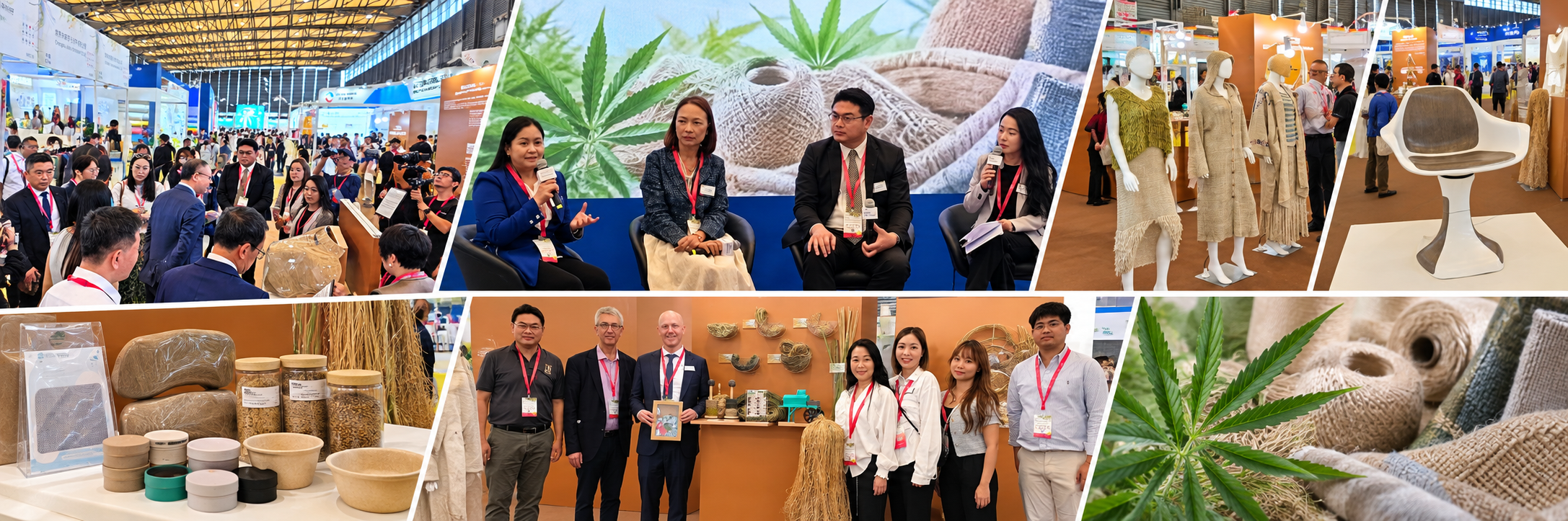
Under the theme “From Industrial Hemp to Technical Hemp,” AIHF created a dedicated showcase covering the progression from raw hemp fiber to textiles and finished materials. On display were fabrics, recycled PET blends, bioplastics, composites, automotive components, furniture, fashion and other consumer products.
It was a good setting for hemp. Cinte Techtextil China is about textiles, materials, manufacturing and technology, not hemp specifically. That put the products in front of manufacturers, researchers and material developers who may have little connection to the hemp industry itself.
And that is where hemp needs to be.
More Than Hemp Clothing
Textiles have always been one of hemp’s most recognizable uses. But apparel is only part of the fiber story.
Technical textiles, nonwovens, composites and molded materials create opportunities in industries that operate at a much different scale than the traditional hemp clothing market.
The AIHF exhibit showed that range in a very physical way. Visitors could move from raw stalk and fiber to yarn, fabrics, clothing, molded products and finished goods. Instead of talking about what hemp might someday become, much of it was sitting there on the show floor.
That distinction is important.
The hemp industry has never suffered from a shortage of ideas. The harder part has been turning those ideas into products that manufacturers can make consistently, at the right specifications and at a price the market will accept.
Putting Hemp in the Manufacturing Conversation
The Shanghai event gave AIHF and its partners three days to have those conversations directly with people working in textiles, materials and manufacturing.
The showcase drew interest from international visitors, manufacturers, researchers and product developers, with discussions extending well beyond conventional hemp textiles.
AIHF also organized the session “Industrial Hemp Fiber: Building the Future of Sustainable Materials,” featuring Sharon Deidre Leyson, Secretary-General of AIHF; Asst. Prof. Dr. Nopporn Patcharaprakiti and Asst. Prof. Yanisa Komonsilichok of Rajamangala University of Technology Lanna (RMUTL); and Dr. Jariyavadee Sirichantra of Empowermatt Co., Ltd.
The panel focused on the work already taking place in Asia around hemp fiber, material development and commercial applications.
A Collaborative Effort
The Industrial Hemp Showcase brought together Highland Research and Institute; Hemp Appropriate Technology for Industrial Hemp Center at Rajamangala University of Technology Lanna; Earthology – Thai Taffeta Co., Ltd.; Empowermatt Co., Ltd.; The Hemp Plastic Company; and the National Industrial Hemp Council of America (NIHC).
AIHF also recognized Messe Frankfurt (HK) and the Cinte Techtextil China team for inviting the federation to participate and supporting the exhibit.
The mix of organizations says something about where this industry is going. Hemp doesn’t move from a field into an automotive component, piece of furniture or technical fabric because one company does everything. It takes growers, processors, researchers, engineers, manufacturers and buyers working across borders.
From Asia to the Global Market
China remains a major force in global textile and manufacturing, while Thailand and other parts of Asia are building their own hemp research, processing and product development capabilities.
Cinte Techtextil China gave AIHF a chance to put some of that work in front of the international textile industry in Shanghai.
There is still plenty of work between a promising hemp material and a commercially successful product. But getting hemp out of hemp-only events and onto the floor at major manufacturing and textile exhibitions is part of how that work gets done.
From Industrial Hemp to Technical Hemp. From Research to Real-World Applications. From Asia to the Global Market.
Hemp Beyond Borders.
