
By: RootSource Media Staff,
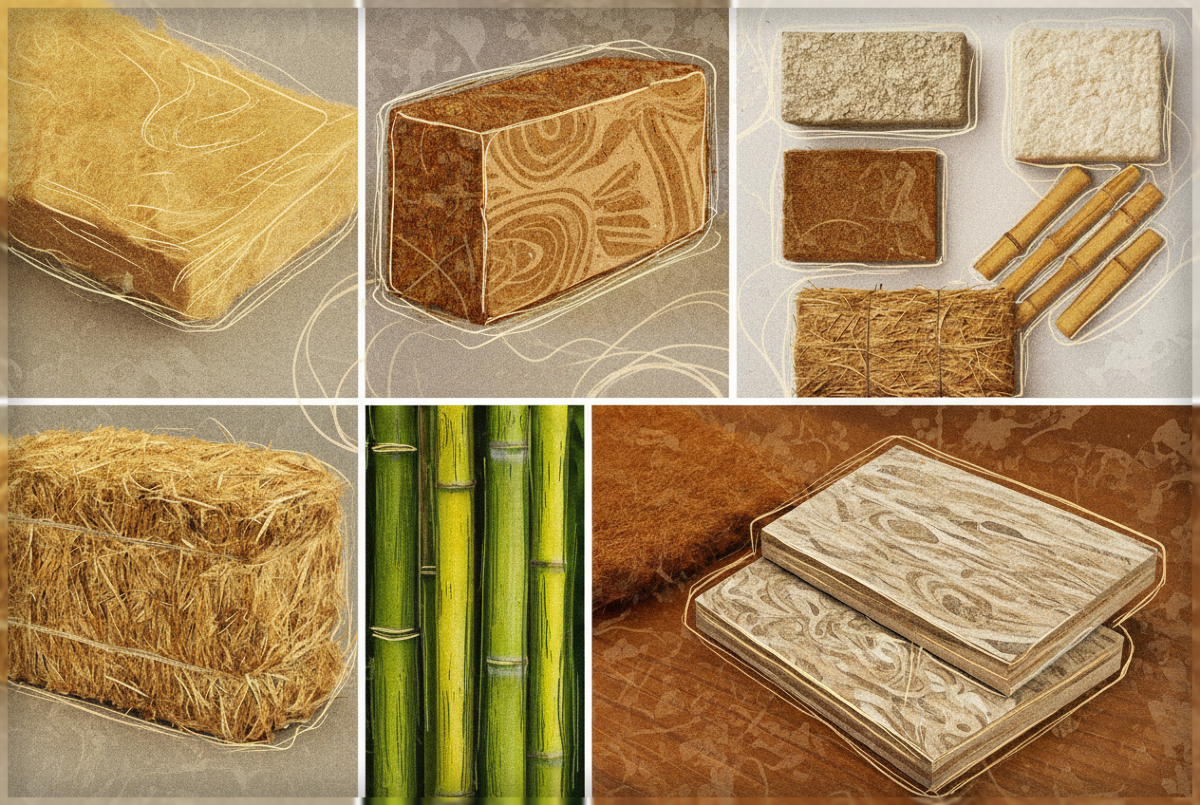
In recent years, architects, builders, and material scientists have turned to the past for inspiration – embracing natural, sustainable materials to confront the environmental toll of conventional construction. Hemp, bamboo, mushroom composites, sugarcrete, coconut fiber, straw, cork, and other bio-based options are gaining traction for their unique benefits and low carbon footprint.
Hemp Takes Center Stage
Hemp has emerged as a powerhouse among natural materials, used in diverse forms across the building spectrum.
- Hempcrete (hemp-lime): Created by mixing hemp hurds with a lime-based binder, hempcrete is a lightweight, breathable insulating material that regulates moisture and absorbs significant amounts of carbon dioxide during both growth and curing. While not suitable for structural loads, it is widely applied as infill in timber-frame walls, prefabricated insulation blocks, or cast in place.
- HempWood®: Processed under heat and pressure with soy-based adhesives, HempWood is durable, no-VOC, and competitively priced with traditional hardwoods. It is increasingly used for flooring, cabinetry, furniture, paneling, and decorative interiors.
- Hemp Insulation: Hemp fiber batts and semi-rigid boards are breathable, mold-resistant, and naturally hypoallergenic. They maintain thermal properties even in damp conditions and contribute to healthy indoor air quality.
- Pre-fabricated Hemp Panels: Compressed hemp fibers with natural binders create lightweight, biodegradable panels for interior wall systems.
- Hemp Blocks: Dense, modular building units that offer durability and performance without synthetic additives.
Bamboo: Nature’s Steel
Bamboo is one of the fastest-growing and most versatile natural building materials on the planet. Often called “nature’s steel,” it combines lightness with exceptional tensile strength.
- Structural Applications: Bamboo is widely used in Asia and Latin America for scaffolding, flooring, and even multi-story construction. Its hollow yet strong culms make it an efficient load-bearing option.
- Engineered Bamboo Products: Modern treatments and laminating techniques have elevated bamboo into panels, beams, and flooring materials with consistent strength and durability, suitable for both traditional and contemporary designs.
- Sustainability Edge: Bamboo matures in just 3-5 years, sequesters large amounts of carbon, and regenerates without replanting – making it a leader in renewable building resources.
Other Biomaterials on the Rise
- Mushroom Mycelium Composites: Grown from fungal mycelium and agricultural byproducts, these lightweight, biodegradable materials are carbon-negative and offer insulation, sound absorption, and structural potential.
- Sugarcrete: Derived from sugarcane waste, sugarcrete is being explored as a low-carbon replacement for concrete blocks, with early research indicating significant emissions reductions.
- Straw & Light-Straw-Clay: Long used in vernacular architecture, straw bale and straw-clay systems offer affordability, insulation, and carbon storage potential.
- Coconut Fiber & Cork: Both provide excellent breathability and moisture regulation. Cork also offers acoustic insulation and fire resistance.
- Cross-Laminated Timber (CLT): Engineered from layers of lumber, CLT enables rapid construction of tall wood buildings with lower embodied carbon than steel or concrete.
- Other Emerging Materials:
- Kenaf and Flax: Fast-growing fiber crops being adapted into insulation and panel products.
- Recycled Agricultural Waste Panels: Turning rice husks, wheat straw, and similar residues into composite boards.
- Bio-based Resins and Adhesives: Replacing petroleum-derived binders with plant-based formulations for use across natural material systems.
Why Natural Materials Matter Now
The drive toward biomaterials is fueled by three main forces:
- Climate Urgency: Construction is responsible for nearly 40% of global carbon emissions, demanding low-carbon alternatives.
- Health & Wellness: Breathable, non-toxic, moisture-regulating materials improve indoor air quality and human health.
- Policy & Innovation: Evolving building codes, supportive regulation, and increased investment are helping natural materials move from experimental to mainstream.
The Road Ahead
For biomaterials to transition from niche to norm, standardization, reliable supply chains, and expanded code adoption are critical. Yet momentum is undeniable. From bamboo bridges to hempcrete housing and mycelium insulation panels, the foundations of a bio-based building sector are being laid.
Natural materials offer more than carbon savings – they provide comfort, resilience, and a deep connection to regenerative ecosystems. As the construction industry searches for scalable solutions, hemp, bamboo, and the broader family of biomaterials point toward a future where our built environment grows from the ground up.
