By: RootSource Media,
In a fashion industry dominated by speed, trend cycles, and globalized shortcuts, the Commonwealth Denim Project is doing something almost radical. It is slowing down.
Commonwealth Denim is a hemp-based selvedge denim initiative developed through a collaboration between Tuscarora Mills and Canna Markets Group. The project is focused on building a transparent, performance-driven denim apparel supply chain rooted as deeply in domestic manufacturing as current infrastructure allows. The goal is not fast fashion or speculative scale, but the deliberate development of durable hemp denim that reflects material integrity, supply-chain accountability, and long-term system health.
The idea for Commonwealth Denim took shape in November 2022 during an informal coffee conversation at the Pennsylvania Hemp Summit. In a discussion with Ken Elliott of IND HEMP, the founding collaborators asked a straightforward question that most of the industry had avoided. Could a commercially viable, high-quality pair of jeans be made from 100 percent hemp denim using a largely domestic supply chain?
That question became the foundation of the project and set in motion a multi-year research, development, and testing process that placed material credibility ahead of market timing.
From late 2022 through 2024, Commonwealth Denim focused almost entirely on material development rather than product release. Nearly two years were spent researching, sourcing, and testing hemp fibre inputs capable of meeting the structural, durability, and performance demands of denim. Instead of rushing toward a launch, the team invested time in understanding how hemp behaves under abrasion, tension, washing, and extended wear.
The fabric itself is produced using European-sourced long-fibre, wet-spun hemp yarn selected for its strength, consistency, and suitability for traditional denim weaving. That yarn is woven by Tuscarora Mills on vintage selvedge looms in Pennsylvania, producing a heritage-grade selvedge hemp denim fabric. Throughout this phase, the team evaluated fibre behavior under real-world conditions, shrinkage and wash performance, long-term structural integrity, and compatibility with classic denim construction techniques. This research-first approach delayed market entry by design, prioritizing repeatability and trust over speed.
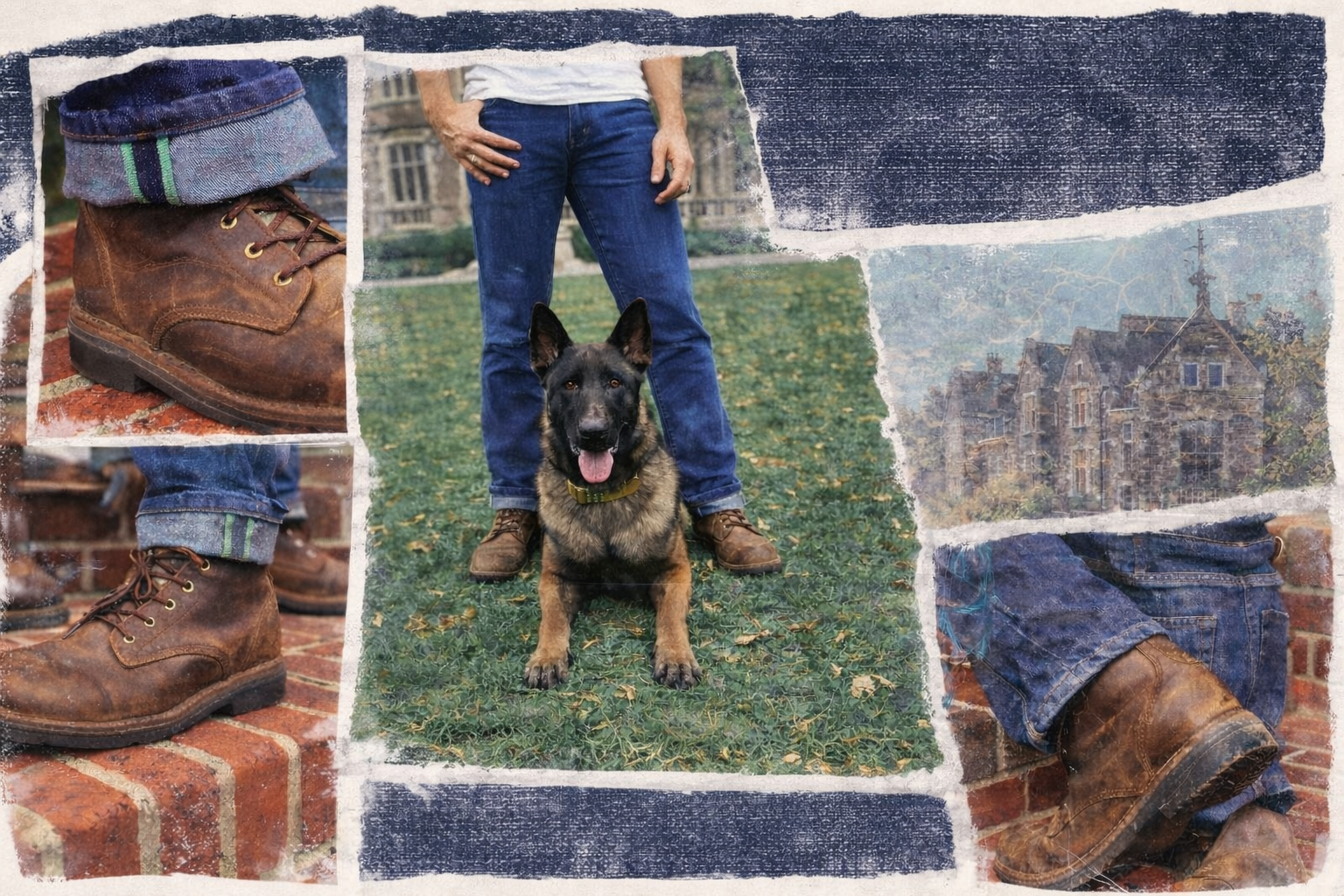
In 2024, the project transitioned into garment design, pattern development, and fit refinement. Multiple design samples were produced to test seam durability, stitch integrity, shrinkage control, and overall wearability. The resulting jean is positioned as a heritage-inspired, contemporary cut that avoids trend-driven silhouettes in favor of longevity, repairability, and consistency across production runs.
A central objective of Commonwealth Denim has been to pursue a domestic supply chain wherever feasible. While high-performance hemp fibre inputs are currently sourced from Europe, downstream manufacturing decisions were guided by U.S. capability as a priority. The project has secured Pennsylvania-based fabric weaving, cut-make-trim operations, and domestic pattern development and design oversight.
As a result, the jeans are designed, patterned, woven, cut, and sewn in the United States. That level of transparency is particularly significant in hemp apparel, where supply chains are often opaque or poorly defined.
Unlike Europe and parts of Asia, very little hemp grown in North America is cultivated specifically for apparel-grade fibre. Much of the existing supply is optimized for non-woven or industrial applications, where harvesting, retting, and processing priorities differ significantly from those required for garments. For apparel, fibre quality is determined well before a loom is involved. It depends on how the crop is grown, how it is processed, and whether the intended end use is clearly understood across the supply chain.
By deliberately building toward vertical integration, Commonwealth Denim aims to establish hemp supply chains grown and processed specifically for garment manufacturing. This approach preserves fibre integrity from field to finished product, increases value retention at each stage of refinement, and reduces reliance on volatile external inputs. At a practical level, high-quality hemp apparel does not require vast acreage. Conservatively, one acre of hemp cultivated for textile use can yield approximately 250 to 450 pairs of jeans, making boutique and high-end production both feasible and scalable.
The project is led by a team with deep experience across manufacturing, logistics, and hemp textiles. August Cook, CEO and majority shareholder of Commonwealth Denim, is a retired U.S. Army officer and graduate of the United States Military Academy at West Point, bringing a disciplined, systems-oriented approach to leadership and execution. Dave Cook and Heidi Custer of Tuscarora Mills contribute decades of experience in apparel manufacturing, international sourcing, and industrial production systems. Joseph Carringer, a partner in Commonwealth Denim and principal at Canna Markets Group, brings more than two decades of experience bridging agricultural systems with hemp textile manufacturing and apparel markets.
Commonwealth Denim is now entering a preliminary market launch phase, beginning with a limited production run based on the finalized design sample. A preorder for the first production run is currently available at https://commonwealthdenim.com/, allowing early supporters to participate directly in the project’s next phase while preserving the integrity of its manufacturing model.
Carringer will also be speaking at IHI – Industrial Hemp International this March, where attendees will be able to see the Commonwealth Denim jeans in person. In an industry full of promises about reshoring, transparency, and sustainability, Commonwealth Denim stands apart by building carefully, deliberately, and in plain sight.
