By: RootSource Media,
The hemp industry has a language problem.
For years, most of the conversation around hemp’s biochemical side has been reduced to a single word: cannabinoids. That shorthand may have helped early on, but it now limits how the plant is understood and how the industry presents itself.
If we want to be accurate, the better term is resin-based applications.
Because that’s what we’re actually dealing with.
Resin Is the System, Not Just a Product
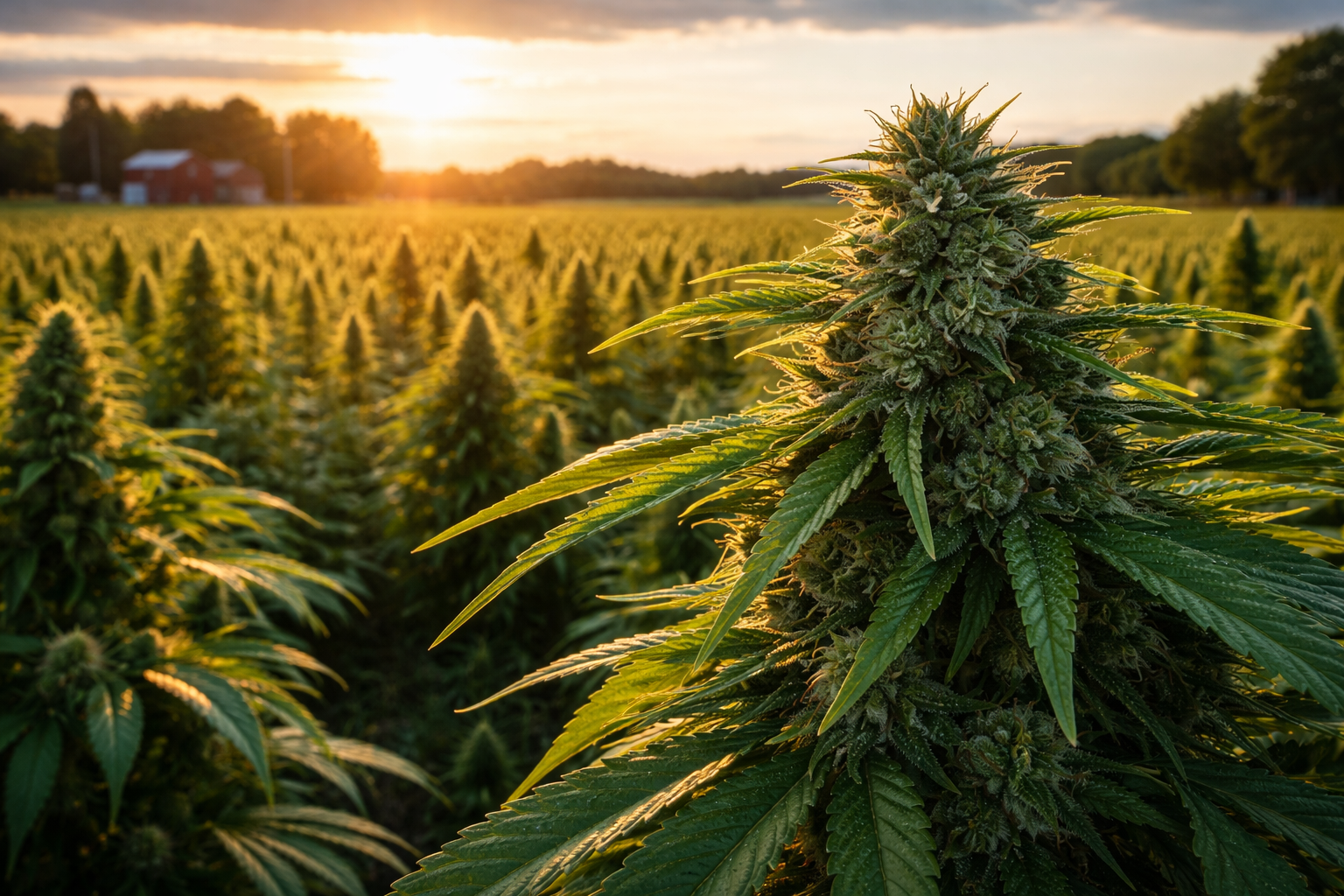
Hemp resin is a complex mixture of compounds produced by the plant, primarily in the flowering tops. Inside that resin are cannabinoids, but also terpenes, flavonoids, waxes, lipids, and other plant-derived molecules.
Calling all of that “cannabinoids” is incomplete.
Those compounds serve different functions across multiple industries:
- Cannabinoids in wellness, pharmaceutical, and consumer products
- Terpenes in flavor, fragrance, solvents, and chemical manufacturing
- Waxes and lipids in cosmetics, coatings, and industrial formulations
This is not a single market. It’s a platform of inputs feeding into many markets.
Other crops are already understood this way. Corn feeds food, fuel, and chemicals. Pine feeds lumber and terpene chemistry. Hemp resin belongs in that same category as a biochemical feedstock.
The Industry’s Narrow Framing
The early focus on CBD helped build the modern hemp market. It created revenue, supported farmers, and led to the first wave of processing infrastructure.
But it also locked the conversation into a narrow lane.
Today, parts of the industry argue that hemp should be defined strictly as fiber and grain, with cannabinoids pushed aside or removed entirely. That position ignores how the plant functions and how agricultural systems actually scale.
Resin-based production has been one of the primary economic drivers in U.S. hemp over the past decade. It supported cultivation, funded genetics work, and helped establish supply chains that benefit the broader industry.
Trying to separate it out now doesn’t simplify hemp. It weakens the overall system.
Offtake, Economics, and the Farmer Reality
This part tends to get glossed over, usually by people who aren’t the ones planting the crop.
Farmers don’t operate on ideology. They operate on margins.
Resin-based outputs have consistently offered higher per-acre value compared to fiber and grain, especially in the early stages of market development. That’s not a theory. That’s exactly why cannabinoids drove acreage expansion in the first place.
When you argue to remove or sideline resin-based applications, you’re not just making a philosophical point about what hemp “should be.” You’re proposing to eliminate one of the most viable offtake options farmers have.
That means:
- Fewer revenue streams
- Less flexibility in how a crop is sold
- Greater dependence on still-developing fiber and grain infrastructure
No other major agricultural commodity works like that. Corn, soy, and timber all succeed because they have multiple end uses and layered markets.
Hemp should be no different.
If anything, expanding resin-based applications alongside fiber and grain strengthens the entire system. It gives farmers more ways to stay profitable while the rest of the supply chain continues to mature.
Opposing that doesn’t protect the industry. It limits it.
Intoxicants and the Need for Fit-for-Purpose Frameworks
There is a real distinction between non-intoxicating and intoxicating products derived from hemp. That distinction needs to be handled clearly.
But the answer is not to remove resin from hemp.
The answer is fit-for-purpose regulatory frameworks.
Different end uses require different rules:
- Non-intoxicating cannabinoids, terpenes, and botanical compounds
- Food, beverage, and wellness applications
- Industrial chemical and material inputs
- Intoxicating products that require stricter controls
Trying to regulate all of that under a single, blunt framework is exactly how you end up with confusion, gray markets, and stalled progress.
A fit-for-purpose approach aligns regulation with actual use cases. It allows non-intoxicating industrial and wellness applications to move forward while establishing clear guardrails for intoxicating products.
That’s how other agricultural and biochemical industries operate. Hemp is not an exception.
Resin Connects Hemp to Established Industries
Resin-derived compounds feed directly into major global sectors:
- Pharmaceuticals and medical research
- Nutraceuticals and supplements
- Cosmetics and personal care
- Food and beverage formulation (where permitted)
- Flavor and fragrance chemistry
- Specialty chemicals and green solvents
- Agricultural inputs such as botanical pesticides
These are established markets with significant scale. Hemp functions as a source of plant-based inputs within them, not as an isolated niche.
In many cases, non-cannabinoid components such as terpenes offer broader industrial applications and fewer regulatory constraints than cannabinoids themselves.
A Biorefinery Approach
A mature hemp system treats the plant as a multi-output resource.
From the resin side alone, processors can develop:
- Cannabinoid fractions
- Terpene streams
- Wax and lipid materials
- Secondary compounds for research and industrial use
At the same time, fiber, hurd, and residual biomass feed into materials, construction, and energy applications.
This integrated approach reflects how other agricultural commodities are utilized. It creates multiple revenue streams from a single crop and improves overall efficiency.
Moving Toward Alignment
The hemp industry is often divided into separate camps: fiber, grain, and cannabinoids. In practice, the plant does not operate in those silos.
A more accurate framework recognizes three primary lanes:
- Fiber and materials
- Grain, food, and feed
- Resin-based biochemical applications
Each has its own market dynamics and regulatory needs. All are legitimate parts of the same system.
Closing
The hemp plant doesn’t care about our internal debates. It produces fiber, grain, and resin all at once, whether we acknowledge it or not.
The real question is if the industry is willing to catch up to that reality.
This article builds on the work and perspective of Jeremy Klettke of Davis Farms, who has been instrumental in advancing the concept of resin-based applications within the hemp industry.
